Balloon Bunting Watercolor JPG 7S-21 Review
First Impressions: Whimsy Meets Stitch Reality
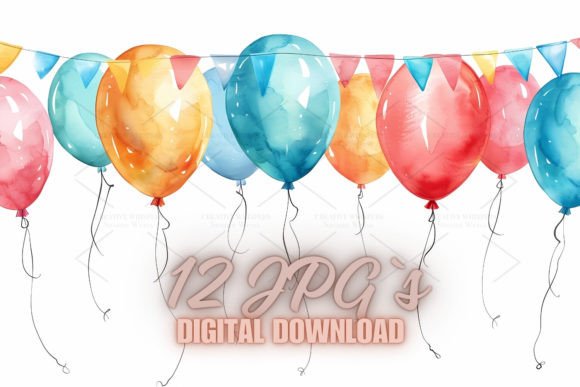
When I first opened Balloon Bunting Watercolor, JPG 7S-21, my immediate reaction was that this illustration captures a specific, nostalgic sweetness that is highly marketable right now. As a designer who reviews assets for actual production rather than just digital display, I look past the pretty pixels to see the potential stitch path. This design falls squarely into the Illustrations category, but unlike flat vector art, the watercolor aesthetic presents unique opportunities and challenges for machine embroidery. The mood is undeniably celebratory yet soft, making it feel less like generic party clipart and more like a curated boutique graphic.
The layout of the bunting suggests a horizontal orientation, which immediately signals its best applications. Visually, the balloons have varying opacities and edge softness typical of watercolor media. For an embroidery project, this means we aren't looking for hard, crisp satin stitch borders. Instead, this design begs for a softer interpretation, perhaps utilizing running stitches or light fill stitches to mimic the painted bleed. If you are an Etsy seller or small shop owner, this visual personality positions the finished product as "handmade" and "artisanal" rather than mass-produced, which is a critical distinction for buyer engagement in the current market.
Real-World Application: Stitching a Nursery Tote
To truly evaluate Balloon Bunting Watercolor, JPG 7S-21, I mentally placed it on a recent client request: a personalized canvas tote bag intended as a gift for a new mother. This is a classic use case where the design needs to perform both aesthetically and structurally. Canvas is a forgiving fabric texture, but it has enough grain that delicate watercolor details can get lost if the digitizing isn't thoughtful.
In this scenario, I envisioned the bunting spanning the upper third of the tote, serving as a decorative header above a monogram. The challenge with converting a JPG watercolor source into an embroidery file is maintaining the dreamy quality without creating a bulletproof vest of dense thread. For this tote bag design, I would avoid heavy satin stitch outlines. Instead, I’d recommend interpreting the balloon edges with tonal thread colors and variable density fill stitches. This approach preserves the artistic integrity of the original illustration while keeping the stitch count reasonable. Customers buying handmade products value tactile comfort; a stiff, overly dense embroidery area on a soft nursery item can detract from the perceived quality. By respecting the watercolor origin, the custom apparel or accessory feels lighter and more premium.
Navigating Fabric Choices and Technical Constraints
While Balloon Bunting Watercolor, JPG 7S-21 is versatile, it requires careful placement. Not every substrate is a friend to watercolor-style embroidery. Here is where practical judgment comes into play:
- Stretchy Fabrics: On sweatshirts or baby clothes, the horizontal span of a bunting design can distort if the stabilizer is inadequate. Because watercolor effects often rely on precise color blending, even minor fabric shift during stitching can ruin the gradient effect. Always use a high-quality cut-away stabilizer for knits.
- Dark vs. Light Backgrounds: Watercolor illustrations are inherently translucent. If you stitch this on dark fabric without a white underlay base, the pastel thread colors will muddy and lose their luminosity. This design performs best on white, cream, or pale blush fabrics where the thread can mimic the paper-white background of the original art.
- Curved Surfaces: Be cautious using this wide bunting format on caps or curved sleeves. The straight-line geometry of bunting flags fights against cylindrical hooping. If you must use it on a hat, consider separating the elements or accepting that the outer flags may distort slightly.
- Small Hoop Sizes: Reducing a complex watercolor illustration too much results in detail loss. If your hoop size forces you to shrink Balloon Bunting Watercolor, JPG 7S-21 below four inches wide, test the legibility of the flag separations first. Tiny details may merge into a solid blob of thread.
Commercial Value for Makers and Sellers
For creative entrepreneurs and commercial embroidery businesses, asset selection is about ROI and brand consistency. Balloon Bunting Watercolor, JPG 7S-21 offers strong commercial viability because it bridges multiple niches. It works equally well for baby embroidery, birthday party decor, and spring-themed boutique merchandise. This versatility allows you to maximize the return on your design purchase.
However, professionalism lies in execution. When listing finished products on Etsy or at craft fairs, your mockups must accurately represent how the watercolor texture translates to thread. Do not simply overlay the JPG onto a shirt template. Create a printable mockup based on actual stitch-outs or use software that simulates thread texture. Buyers need to trust that the personalized gift they receive matches the digital preview. Furthermore, always verify the licensing terms of this digital embroidery file before selling. Confirm whether the license covers physical end-products only or if it extends to digital transfers. Protecting your business means respecting intellectual property boundaries.
Designer Notes: Before You Thread the Needle
As with any machine embroidery design derived from raster art, preparation prevents disappointment. Here is my checklist for working with Balloon Bunting Watercolor, JPG 7S-21:
- Test on Scrap First: Never stitch this directly onto a final product without a test run. Watercolor digitizing varies wildly between digitizers. Check if the stitch density suits your target fabric.
- Audit Thread Colors: Watercolor relies on subtle shading. Ensure your thread palette includes enough tonal variation to replicate the wash effect. Flat, single-color fills will make the design look cartoonish rather than painterly.
- Check Stabilizer Pairing: Match your stabilizer weight to the fabric texture. Lightweight lawn needs different support than heavy denim. The wrong stabilizer will cause puckering that destroys the soft watercolor illusion.
- Verify File Compatibility: Since the product title specifies JPG, confirm you have the appropriate embroidery file format (PES, DST, EXP, etc.) for your machine. A JPG is a reference image, not a stitch file. Ensure you have purchased or received the actual digitized version suitable for your equipment.
- Evaluate Washability: If this is for a tea towel or baby bib that will face frequent laundering, ensure the stitch type is secure. Long running stitches used to simulate paint strokes can snag. Consider adding tack-down stitches or adjusting the design for high-wear items.
Ultimately, Balloon Bunting Watercolor, JPG 7S-21 is a charming asset with significant potential for makers who understand how to translate digital art into tactile reality. By approaching it with technical mindfulness and respect for the medium, you can transform this lovely illustration into embroidered goods that delight customers and elevate your brand’s reputation for quality craftsmanship.