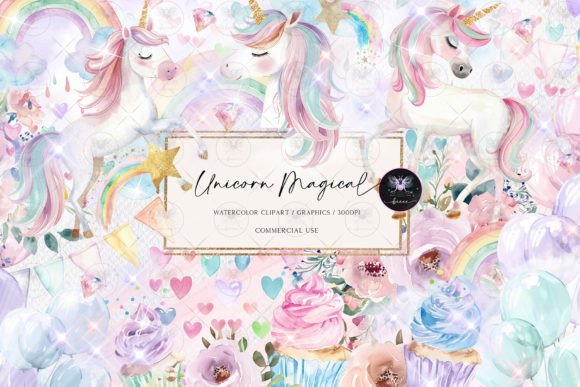
Unicorn Magical Watercolor Clipart Illustrations Review
As a brand designer specializing in local business identity, my first impression of the Unicorn Magical Watercolor Clipart collection was one of immediate versatility for the children’s and boutique market. The aesthetic strikes a delicate balance between whimsical playfulness and soft sophistication, avoiding the harsh, neon saturation often associated with generic unicorn graphics. Instead, these illustrations utilize a muted, dreamy watercolor texture that suggests a handmade, artisanal quality. For a small business owner, this specific mood is crucial; it signals to customers that the product inside is crafted with care rather than mass-produced. The personality conveyed is gentle, imaginative, and premium-lite, making it an excellent candidate for businesses targeting parents, gift-givers, or those seeking a touch of magic in their daily routines.
Elevating Product Packaging and Label Design
In a recent branding project for a local organic children’s skincare line, we needed a graphic design asset that could bridge the gap between safety and enchantment. The Unicorn Magical Watercolor Clipart proved instrumental in our packaging design strategy. When applied to product labels, the soft edges of the watercolor style allow the illustration to sit harmoniously behind typography without competing for legibility. This is vital for visual hierarchy on small containers where ingredient lists and safety warnings must remain clear. We utilized the unicorn motifs as corner accents on shampoo bottles and as central hero graphics on outer box packaging. The transparency of the PNG design files meant we could layer them over pastel brand colors seamlessly, creating a cohesive look across the entire product line.
For food businesses like bakeries or candy shops, these illustrations offer similar value. Imagine a sticker sealing a box of birthday cupcakes featuring a subtle watercolor unicorn; it instantly elevates the perceived value of the treat. In professional branding, consistency is key. By using elements from this single clipart set across hang tags, thank-you cards, and product mockups, a handmade business can create a unified unboxing experience that encourages social media sharing and builds customer trust through polished presentation.
Strategic Applications in Marketing and Digital Presence
Beyond physical goods, this asset collection serves as a robust foundation for social media graphics and web design. When designing Instagram templates for a client’s seasonal campaign, I found that the watercolor texture adds necessary warmth to digital screens. Unlike flat vector art, which can sometimes feel sterile in a feed, these illustrations bring an organic, editorial design quality that stops the scroll. They work exceptionally well as background elements in Canva templates for promotional ads or as decorative borders for email newsletters announcing new product launches.
- Social Media Campaigns: Use individual unicorn elements as recurring characters in stories and posts to build brand recognition.
- Website Banners: Create a soft, inviting header image by combining multiple clipart pieces with ample negative space for text.
- Printable Design: Incorporate into coloring sheets or activity cards included with orders to enhance the customer experience.
- Promotional Materials: Feature on flyers and posters for local events, workshops, or pop-up markets to attract families.
The emotional connection fostered by these marketing visuals cannot be overstated. For a local business, standing out means connecting on a human level. These illustrations evoke nostalgia and wonder, emotions that drive purchasing decisions in the gift and children’s sectors far more effectively than stark minimalism.
Where to Exercise Caution in Commercial Design
While the Unicorn Magical Watercolor Clipart is highly effective, a professional brand designer must know where it does not belong. It is essential to recognize that this style is inherently informal and decorative. I would advise against using these assets for formal corporate branding, legal services, or high-end luxury minimalist brands where clean lines and abstraction are preferred. Furthermore, care must be taken when placing these illustrations on crowded product packaging. Because watercolor relies on soft gradients and varying opacity, placing detailed text directly over the artwork can destroy readability. Always ensure there is sufficient contrast or a solid color block separating the illustration from critical information.
Additionally, consider the scale. On very small labels, such as lip balm tubes or sample vials, intricate watercolor details may get lost or appear muddy when printed. In these instances, it is better to use simplified icons or solid colors. Designers should also avoid using these playful assets in sections dedicated to serious allergen warnings or compliance data, as the whimsical tone could inadvertently undermine the gravity of safety information. Maintaining this distinction ensures that the brand remains both charming and responsible.
Technical Evaluation and Pre-Press Checklist
Before committing any graphic design asset to print or commercial use, rigorous testing is non-negotiable. When evaluating the Unicorn Magical Watercolor Clipart for a real-world project, I always begin by checking the resolution and file integrity. Ensure the PNG design files are at least 300 DPI for physical printing; pixelation on a product label destroys perceived quality immediately. If SVG design files are available, inspect the vector paths to ensure they are clean and editable, allowing for color adjustments to match your specific brand palette perfectly.
- Mockup Testing: Always place the clipart on realistic product mockups before finalizing. Colors shift differently on textured paper versus glossy screens.
- Typography Pairing: Test the illustrations beside your chosen fonts. These watercolors pair beautifully with handwritten scripts and rounded sans serifs but may clash with rigid, industrial typefaces.
- Black and White Conversion: Check how the asset looks in grayscale. If you plan to offer budget-friendly black-and-white printing options for inserts or receipts, the contrast must hold up without color.
- Licensing Verification: Before selling any product featuring these designs, confirm the commercial license terms. Ensure the license covers physical product sales, digital products, and marketing visuals for your specific business model.
- Competitor Analysis: Compare your intended usage with competitor packaging. If every other local soap brand uses similar unicorns, consider cropping or recoloring the asset to create a unique variation that supports distinct brand identity.
Finally, remember that while creative marketplaces offer incredible resources, the responsibility for professional branding lies with the designer or business owner. Using Unicorn Magical Watercolor Clipart effectively requires treating it as a raw ingredient rather than a finished meal. By customizing the placement, adjusting the color grading, and integrating it thoughtfully into a broader visual system, small business owners can transform a digital download into a proprietary brand asset that resonates deeply with their local community and drives tangible business growth.