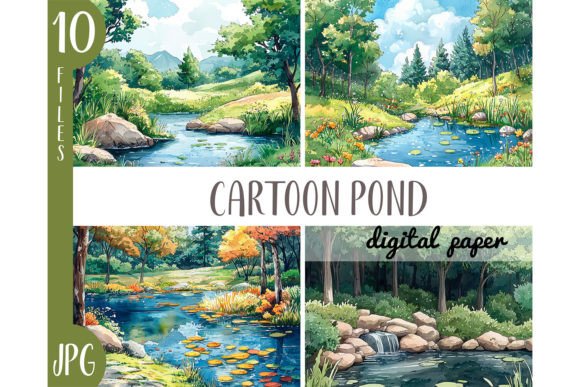
Watercolor Cartoon Pond Clipart JPG for Illustrations
First Impressions: Evaluating Whimsy for Client Work
When sourcing a graphic design asset for a client project, my first criterion is always emotional resonance. Upon reviewing the Watercolor Cartoon Pond Clipart JPG, the immediate impression is one of nostalgic softness and approachable whimsy. The hand-painted texture suggests authenticity, distinguishing it from sterile vector art often found in generic stock libraries. For a designer, this specific aesthetic signals a perfect fit for clients in the children’s education sector, organic skincare brands, or boutique stationery lines. The mood is inherently gentle, evoking feelings of tranquility and nature-based playfulness that are difficult to replicate with digital brushes alone.
In a recent branding consultation for a handmade baby product line, we needed visuals that communicated safety and natural ingredients without looking clinical. This style of illustration bridges that gap effectively. It feels curated rather than manufactured. However, as with any raster-based digital product, the initial visual appeal must be weighed against technical utility. While the charm is evident, I immediately assessed whether the watercolor edges were clean enough for professional extraction and if the color palette aligned with modern small business branding trends. The asset succeeds in creating a warm atmosphere, but its application requires strategic placement to maintain professional polish.
Strategic Applications in Brand Identity and Packaging
The true test of any clipart is its versatility across different media. In the context of brand identity, this Watercolor Cartoon Pond Clipart JPG serves best as a supporting visual element rather than a primary logo mark. Watercolor textures can degrade when scaled down for favicons or app icons, so I recommend utilizing this asset for secondary brand patterns, packaging inserts, or thank-you cards. For a packaging design project involving eco-friendly tea boxes, these pond elements could create a beautiful border or background wash that reinforces the organic narrative without competing with regulatory text.
For print-on-demand sellers and Etsy shop owners, this asset shines in surface pattern design and sticker design. The cartoon style translates exceptionally well to die-cut stickers where the irregular watercolor edges add character. When designing t-shirt design concepts for summer camps or nature retreats, the clipart provides an instant focal point that feels custom-illustrated. I have found that combining these organic shapes with bold, sans-serif typography creates a striking contrast that appeals to modern parents while retaining a sense of childhood wonder. This balance is crucial for commercial design assets intended for retail environments where shelf impact matters.
Optimizing for Digital Marketing and Social Media
In the realm of social media graphics, this asset performs admirably as a framing device. When creating Instagram carousels or Pinterest pins for a parenting blog, the pond illustrations can soften the hard edges of rectangular photo frames. They act as visual anchors that guide the eye through the content. For Canva template creators, including this type of pre-extracted element adds significant value, allowing end-users to drag and drop professional-grade textures into their own layouts. The key here is ensuring the file resolution supports high-DPI screens; pixelation in marketing visuals instantly erodes trust.
Furthermore, for editorial design and web headers, the Watercolor Cartoon Pond Clipart JPG offers a unique opportunity to break rigid grid systems. Placing a large-scale pond element bleeding off the edge of a website hero section introduces organic flow that keeps users engaged. This technique works particularly well for storytelling brands where the narrative is as important as the product. However, designers must ensure the illustration does not obscure navigation elements or call-to-action buttons, maintaining a clear visual hierarchy even amidst decorative flourishes.
Navigating Technical Limitations and Layout Constraints
While versatile, this asset demands careful handling in specific contexts. As a JPG format, it lacks native transparency, which presents challenges for Cricut project workflows or layered compositions. Designers will need to invest time in precise masking or background removal to avoid unsightly white boxes around the artwork. In minimalist branding or corporate financial sectors, the playful cartoon aesthetic may clash with the required tone of authority and precision. It is vital to recognize when not to use this asset; forcing whimsy into a serious context undermines both the design and the brand message.
Readability is another critical concern. Watercolor textures are inherently noisy. If placed behind body copy or small legal disclaimers, the varying opacity can severely reduce legibility. I advise using this clipart primarily in negative space or as a header/footer accent. For product mockup presentations, ensure the lighting of the clipart matches the lighting of the mockup scene; mismatched shadows or color temperatures can make the final composite look amateurish. Additionally, when working with sublimation design, verify that the color profile converts accurately to CMYK, as vibrant screen colors can sometimes dull during the heat transfer process.
Professional Pre-Flight Checklist for Commercial Use
Before integrating Watercolor Cartoon Pond Clipart JPG into any paid deliverable, I run a rigorous quality assurance protocol. First, always test the asset in black and white. If the illustration relies solely on color for definition, it will fail in single-color print applications like embossing or vinyl cutting. Next, check contrast against both light and dark backgrounds; some watercolor scans lose detail on white paper or disappear entirely on dark fabrics. Preview the file at 100% zoom to inspect for compression artifacts or jagged edges that indicate poor digitization.
- Typography Pairing: Test the clipart alongside your chosen font stack. Handwritten scripts often compete with the organic lines of watercolor, whereas clean geometric sans-serifs provide necessary structure.
- Format Verification: Confirm if a PNG version or SVG design file is available within the design bundle. Raster JPGs are limiting for scalable merchandise.
- Licensing Audit: Scrutinize the commercial license terms. Verify if there are limits on physical sales units or if the asset can be used in digital templates sold to others.
- Print Testing: Never skip a physical proof. Screen brightness deceives; print a swatch to confirm ink density and color accuracy before mass production.
- Mockup Integration: Place the asset on realistic Etsy product mockups to gauge scale and proportion relative to real-world dimensions.
Final Verdict on Creative Value and Versatility
Ultimately, the Watercolor Cartoon Pond Clipart JPG represents a valuable addition to a designer’s toolkit, specifically for projects requiring warmth, nostalgia, and organic texture. Its strength lies in its ability to humanize digital interfaces and add tactile depth to printed materials. For creative marketplace sellers and small business owners, it offers a cost-effective alternative to commissioning custom art, provided the technical limitations are respected. The asset excels in modern design contexts that prioritize emotional connection over rigid minimalism.
However, professional judgment dictates that this asset should be treated as a seasoning, not the main course. Its success depends entirely on thoughtful integration, proper file preparation, and adherence to licensing ethics. When used with intention, it elevates printable design and branding projects from generic to memorable. For the experienced designer willing to perform the necessary pre-flight checks, this clipart delivers genuine creative ROI, transforming standard layouts into evocative visual stories that resonate deeply with target audiences seeking authenticity in an increasingly digital world.