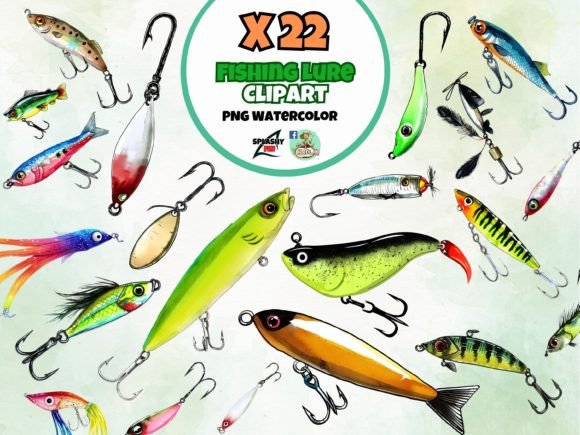
Watercolor Fishing Lure Clipart Illustrations
As a handmade business owner who has spent countless hours testing digital assets before committing them to customer orders, I approach every new graphic design asset with a mix of excitement and skepticism. When I first opened the Watercolor Fishing Lure Clipart file, my immediate reaction was that it struck a difficult balance: it feels authentically rustic yet polished enough for premium merchandise. The mood is distinctly nostalgic and outdoorsy without being overly cartoonish or aggressively masculine. This specific aesthetic appeals to a broad demographic, from avid anglers looking for personalized gear to partners shopping for "fishing dad" gifts. For an Etsy shop owner or craft fair vendor, this style suggests a boutique, artisanal quality rather than mass-produced clip art, which is essential for justifying higher price points on finished handmade products.
Real-World Applications for Sublimation and Print
In my own workflow preparing for the upcoming spring fishing season, I found these illustrations shine brightest in print-based applications. Watercolor textures are notoriously difficult to replicate with vinyl, but they are absolute gold for sublimation design and printable products. I tested this PNG design on a 20oz skinny tumbler wrap, and the soft edges of the watercolor blended seamlessly into the white coating. Unlike harsh vector lines, the painted texture gives the tumbler a high-end, hand-painted appearance that customers love. This asset is equally effective for mug design, where the organic splashes of color can wrap around the curvature without looking pixelated or stiff.
For those focusing on paper goods, this clipart is ideal for greeting cards, gift tags, and party decorations. I envision using these lures as corner accents on wedding invitations for outdoor-themed ceremonies or as central elements on birthday cards. Because the resolution is robust, it also serves as excellent printable wall art for nurseries or man caves. If you create planner stickers or scrapbooking kits, the individual lure elements can be isolated easily, allowing for versatile digital product creation. The key here is leveraging the transparency; ensure your background removal is clean so the watercolor washes look intentional, not messy, when placed on colored cardstock or digital backgrounds.
Navigating Cricut and Silhouette Cutting Limitations
While the visual appeal is undeniable, experienced Cricut users and Silhouette users know that watercolor and cutting machines do not always play nicely together. I must emphasize caution if you intend to use this SVG design for vinyl projects. Watercolor illustrations often have soft, fading edges that cutting software struggles to detect accurately. During my test cuts, I found that intricate details within the lure feathers and hooks required significant simplification in design space before my machine could track them reliably.
This asset works best for large cut files, such as iron-on transfers for t-shirt design or tote bags, where the internal details can be printed via sublimation or DTF while only the outer silhouette is cut. Avoid using this specific graphic for very small cutting details, layered vinyl projects, or tiny sticker sizes under two inches. The thin lines characteristic of fishing line and delicate feather textures will likely tear during weeding or fail to adhere properly. If your business model relies heavily on adhesive vinyl decals, treat this as a print-and-cut asset rather than a standalone cut file. Always simplify the layout and weld overlapping elements to prevent the blade from making unnecessary passes through fragile areas.
Strategic Pairing for Small Business Branding
To maximize the commercial value of this design bundle, typography pairing is critical. The organic, fluid nature of watercolor demands a font that complements rather than competes. For a vintage tackle shop vibe, I recommend pairing these illustrations with a bold serif font or a textured display font. Conversely, for modern baby showers or feminine fishing apparel, a clean sans serif or delicate handwritten font balances the ruggedness of the lures. As a creative entrepreneur, your goal is to create cohesive collections. Use these lures as anchor graphics and build supporting patterns or text layouts around them.
When creating product mockups for your Etsy product listings, place the art on realistic textures like canvas, kraft paper, or matte ceramic. Digital products sell better when customers can visualize the tactile result. I also suggest testing how the colors look on both white and dark products; watercolors can sometimes appear washed out on uncoated surfaces or too vibrant on glossy ones. Adjusting saturation slightly in your design software before printing can save you wasted blanks and ink. Furthermore, consider how this asset fits into seasonal craft bundles. Fishing lures are surprisingly versatile for Father’s Day, summer camp themes, retirement parties, and even autumn hunting seasons if the color palette allows.
Essential Technical Checks Before Selling
Before listing any item made with this graphic design asset, you must perform due diligence to protect your handmade business reputation. First and foremost, confirm the commercial license terms. Just because a file is available in a creative marketplace does not automatically grant unlimited rights for print-on-demand or mass production. Read the fine print regarding whether you can use the illustration as-is or if it must be part of a new, unique design. Most reputable designers require significant modification, which aligns with best practices for avoiding duplicate content issues on platforms like Etsy.
- Verify File Integrity: Open the SVG in multiple programs (Design Space, Illustrator, Inkscape) to ensure layers are intact and no stray nodes exist that could ruin a cut.
- Test Print Colors: Watercolor gradients vary wildly between screen and printer. Run a test swatch on your actual substrate to ensure the blues and greens don't shift unexpectedly.
- Check Transparency: Zoom in at 100% on the PNG design to ensure there are no white halos or jagged artifacts around the lure edges that look unprofessional on dark backgrounds.
- Resize Responsibly: Vector-based watercolors scale infinitely, but raster versions do not. Confirm the DPI remains above 300 at your intended print size to avoid blurry merchandise.
- Mockup Validation: Never rely solely on digital previews. Create at least one physical prototype to photograph, ensuring the scale and color accuracy meet customer expectations.
Ultimately, Watercolor Fishing Lure Clipart offers a fantastic foundation for niche crafting, provided you respect the medium's technical constraints. It bridges the gap between traditional artistry and modern digital fabrication, allowing small business owners to offer unique, emotionally resonant products. Whether you are designing custom apparel for a local tournament or creating printable decor for a lakeside cabin rental, this asset brings a touch of authentic charm that generic vectors simply cannot match. By approaching it with a crafter’s eye for detail and a business owner’s focus on quality, you can transform these digital illustrations into tangible, profitable creations that stand out in a crowded handmade market.