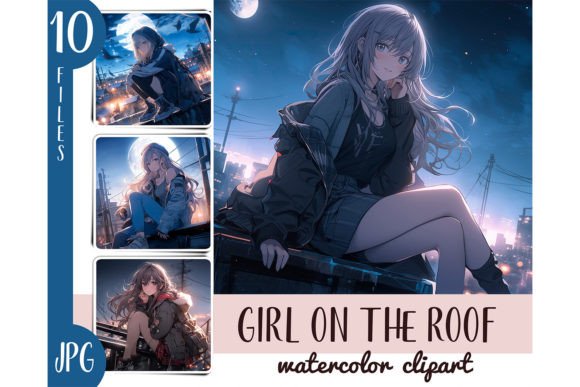
Watercolor Girl on the Roof Clipart JPG Review
As a professional embroidery designer and product reviewer, I approach every new digital asset with a specific question: will this actually stitch out beautifully on fabric? When evaluating the Watercolor Girl on the Roof Clipart JPG, my assessment goes far beyond screen resolution. I am looking at line integrity, color separation potential, and how the whimsical nature of this illustration translates into thread. For fellow makers, Etsy sellers, and apparel decorators, understanding the bridge between a flat JPG image and a textured, three-dimensional embroidered piece is critical for business success and customer satisfaction.
First Impressions and Artistic Mood
My initial reaction to the Watercolor Girl on the Roof Clipart JPG is one of nostalgic warmth. The illustration carries a dreamy, storybook quality that immediately suggests specific niches. It does not feel corporate or rigid; instead, it evokes feelings of childhood imagination, safety, and quiet contemplation. From a design perspective, the silhouette is distinct, which is excellent news for digitizing. However, watercolor edges are notoriously soft and bleeding. As an embroiderer, I instantly recognize that this JPG file cannot simply be auto-digitized. It requires manual interpretation to decide where the watercolor wash ends and the stitch begins. The mood dictates that this belongs on items meant to be cherished rather than utilitarian workwear. It screams nursery decor, vintage-style tote bags, and personalized gifts for readers or dreamers.
Real-World Application: The Custom Sweatshirt Test
To truly evaluate this asset, I mentally placed it in a real production scenario: creating a premium, unisex sweatshirt for a small boutique collection. Sweatshirt fleece is a forgiving but textured canvas. In this context, the Watercolor Girl on the Roof Clipart JPG serves as a central chest or back placement design. Because the source is a raster image, I would need to manually trace the key outlines using running stitches to define the girl and the roof structure against the fuzzy fabric texture. Fill stitches would need to mimic the watercolor gradient without becoming bulletproof armor.
For this specific handmade product, I envision pairing the illustration with minimal, serif typography below. The contrast between the organic, artistic girl on the roof and clean text creates a high-value aesthetic that justifies a higher price point. Customers browsing Etsy listings respond to this combination because it feels curated and intentional. If I were selling this as a finished custom apparel item, the visual appeal of the watercolor translation directly impacts buyer engagement. A muddy, over-dense stitch-out kills sales; a light, airy interpretation that respects the original art builds trust and brand recognition.
Navigating Fabric Limitations and Hoop Sizes
While the design is versatile, practical judgment tells me to use caution with certain substrates. The intricate details inherent in watercolor illustrations can get lost on highly textured fabrics like terry cloth or thick canvas. For tea towels or kitchen linens, the Watercolor Girl on the Roof Clipart JPG might require simplification to maintain clarity. Conversely, on thin, stretchy fabrics like baby onesies or lightweight knits, stitch density becomes the primary concern. Watercolor effects often tempt digitizers to layer too many fill stitches to achieve shading. On delicate garments, this causes puckering and distortion.
I also advise careful consideration of hoop size. This illustration likely has a vertical aspect ratio. Attempting to shrink it down to fit a 4x4 hoop for a baby bib or cap may render the facial features or roof tiles unrecognizable. Caps present another challenge due to their curved surface; the horizontal lines of the roof could appear warped if not properly compensated during the digitizing process from the JPG source. Always verify that your chosen stabilizer matches both the fabric weight and the stitch count required to render the watercolor effect faithfully.
Technical Translation from JPG to Stitch
Working from a Watercolor Girl on the Roof Clipart JPG requires a disciplined approach to color management. Unlike vector files, JPGs do not have separable layers. You must act as both artist and technician. Here are practical notes I follow when converting this type of illustration:
- Test on Scrap Fabric First: Never run a complex watercolor conversion directly on a final product. Stitch out on similar fabric to check registration and density.
- Analyze Thread Color Contrast: Watercolor relies on subtle shifts. Ensure your thread palette captures these nuances without muddying the design. Sometimes fewer colors yield better results than trying to match every pixel.
- Review Stitch Density: Aim for lighter coverage to preserve the "watercolor" feel. Heavy satin stitches will look plastic and detract from the artistic intent.
- Check Licensing: Before selling finished products or offering the digitized version as a digital embroidery file, confirm the commercial license terms of the original JPG illustration.
- Mockup Testing: Use printable mockups to visualize placement before stitching. Compare how the design looks on both light and dark backgrounds, as watercolor typically requires white or cream fabric to shine.
Commercial Viability for Makers and Sellers
For creative entrepreneurs and small shop owners, the value of the Watercolor Girl on the Roof Clipart JPG lies in its versatility across product categories. Beyond apparel, this illustration is perfectly suited for embroidered patches, pillow covers, and holiday gifts. Its gender-neutral, ageless appeal makes it a safe bet for inventory planning. However, professionalism demands consistency. If you use this design for a nursery blanket, ensure the stitch style matches other items in your collection. Brand consistency builds customer loyalty.
When listing items derived from this illustration, transparency is key. Describe the texture and the handmade nature of the embroidery. Buyers appreciate knowing that the soft watercolor look was achieved through thoughtful stitch selection, not just a direct print. This distinction elevates your craft business above mass-produced alternatives. Whether you are creating a personalized gift for a client or stocking your own Etsy shop, treating the source JPG with technical respect ensures the finished product honors the original art while standing up to real-world wear and washing.
Final Designer Verdict
The Watercolor Girl on the Roof Clipart JPG is a beautiful foundation for embroidery projects, provided it is handled with technical intention. It offers immense creative potential for custom apparel, nursery decor, and boutique merchandise. Success depends entirely on the maker’s willingness to adapt the raster image for textile realities. By prioritizing proper stabilization, mindful density, and appropriate fabric pairings, you can transform this digital illustration into a tangible, sellable asset that resonates with customers seeking genuine handmade quality. Always remember to verify specific file details and licensing before beginning your next embroidery project to ensure both legal compliance and technical excellence.