Watercolor Forest Mountains Clipart for Embroidery
First Impressions: Translating Paint to Thread
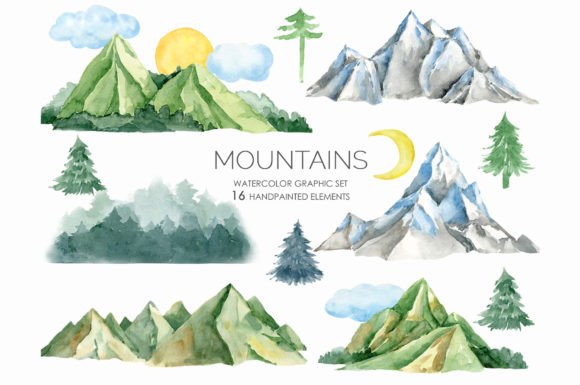
When I first opened the Watercolor Forest Mountais Clipart files, my immediate thought was not about how pretty the digital image looked, but how those soft, bleeding edges would translate into actual stitches. As an embroidery designer and product reviewer, I have learned that what works beautifully as a digital illustration does not always survive the digitizing process. However, this particular collection of illustrations possesses a distinct advantage: the organic nature of watercolor forgives the rigid structure of machine embroidery. Unlike vector art that demands pixel-perfect satin stitch borders, the dreamy, undefined edges of these forest and mountain scenes allow for more artistic interpretation in your embroidery project.
The mood created by this clipart is undeniably serene and rustic. It evokes feelings of Pacific Northwest hiking, cabin getaways, and quiet mornings. For a handmade product, this visual personality is gold. It moves away from the stiff, cartoonish aesthetic that plagues many commercial designs and offers something that feels curated and boutique-ready. When evaluating this for real-world use, I see it fitting perfectly into the current trend of "cottagecore" and outdoor lifestyle branding, making it highly relevant for Etsy seller listings and small shop product lines.
Real-World Application: The Custom Sweatshirt Test
To truly evaluate the viability of Watercolor Forest Mountais Clipart, I mentally placed it onto a specific client request I recently received: a custom embroidered sweatshirt for a wedding party gift. The bride wanted a design that represented their honeymoon location in the Rockies but didn't want a literal map or a cheesy souvenir logo. This is where these illustrations shine.
In this scenario, using this clipart as a base for a sweatshirt embroidery design requires thoughtful adaptation. Watercolor relies on transparency, while embroidery relies on layering. If you are purchasing this as a pre-digitized machine embroidery design, check if the digitizer used blending techniques or layered fill stitches to mimic the wash effect. If you are digitizing it yourself from the raw digital embroidery file, you must avoid heavy underlay in the lighter areas to prevent the fabric from puckering. On a fleece sweatshirt, the texture of the fabric actually helps sell the watercolor illusion, as the stitches sink slightly into the nap, creating natural shading variations that flat cotton cannot achieve.
For this specific personalized gift, the design serves as a high-value focal point. Customers perceive watercolor-style embroidery as more labor-intensive and artistic than standard logos, which justifies a higher price point for your commercial embroidery services. It transforms a basic garment into a keepsake.
Navigating Fabric Choices and Stabilizer Strategy
While the aesthetic is versatile, the physical application of Watercolor Forest Mountais Clipart demands respect for fabric physics. Watercolor designs often involve large areas of fill stitch with varying densities to create shadow and light. This creates a unique challenge when moving between different substrates.
- Tote Bag Design: Canvas and denim are ideal canvases for this art style. The sturdy weave supports dense stitch counts without distortion. Here, you can push the saturation of the thread colors because the fabric won't absorb the visual impact like knit fabrics do.
- Baby Embroidery: Proceed with caution. If applying this to a onesie or baby blanket, the stitch density must be significantly reduced. A heavy watercolor mountain scene will make a lightweight knit fabric stiff and uncomfortable. Consider using this clipart as an applique design instead, stitching down a printed fabric piece rather than trying to replicate the entire painting with thread.
- Kitchen Towels and Tea Towels: Linen and flour sack cotton are excellent choices, but they require proper stabilizer usage. Because watercolor effects often use running stitches or light fills to suggest mist or sky, inadequate stabilization will result in misregistration. Always test on scrap fabric first to ensure your needle isn't pushing the fabric out of alignment during those delicate transition zones.
I strongly advise against using complex watercolor landscape designs on stretchy performance wear or very thin silk unless you are an advanced digitizer. The tension required to render the gradient effects can warp these materials beyond repair.
Commercial Viability for Makers and Sellers
For creative entrepreneurs, the value of Watercolor Forest Mountais Clipart extends beyond a single stitch-out. In the competitive landscape of craft business assets, versatility is key. These illustrations work exceptionally well for creating cohesive brand identities. Imagine a line of holiday embroidery cards where the same mountain motif appears on gift tags, stockings, and table linens. The consistency builds buyer recognition and trust.
Furthermore, these assets are powerful for marketing. Before you even stitch a sample, you can use the high-resolution clipart to create a printable mockup for your online store. This allows you to validate customer interest in a new finished product before investing hours in sampling. However, a critical word of warning: always verify the licensing terms included with your purchase. Just because a file is labeled as clipart does not automatically grant you the right to sell unaltered design assets or mass-produce items. Ensure your license covers commercial embroidery if you plan to sell the stitched goods, and separate permissions if you intend to incorporate the raw art into digital products for resale.
Designer Notes: Ensuring Stitch-Out Success
Based on my experience reviewing similar nature-themed assets, here are practical steps to ensure your Watercolor Forest Mountais Clipart translates successfully from screen to hoop:
- Contrast Check: Watercolor art often uses subtle tonal shifts. Embroidery thread has less dynamic range than printer ink. View your design in grayscale before stitching. If the mountains disappear into the trees in black and white, they will likely blend together in thread. You may need to increase contrast or add outline definition.
- Hoop Size Verification: Do not assume one size fits all. Detailed forest scenes lose integrity when shrunk below 4x4 inches. Check the minimum recommended hoop size provided by the creator. Resizing watercolor styles down usually results in thread breaks and lost detail.
- Thread Palette Selection: Don't rely solely on auto-conversion software. Manually select your thread colors. Watercolor landscapes benefit from variegated threads to break up solid blocks of color and mimic brush strokes. A single shade of green variegated thread can do the work of three solid greens.
- Test on Target Fabric: Never skip this step. A design that looks perfect on stiff felt might fail on a ribbed knit. Test specifically for registration issues in the detailed corners where tree lines meet mountain peaks.
- Mockup Reality Check: Compare your digital preview against a photo of the actual stitch-out. Lighting affects how watercolor embroidery is perceived. Natural daylight photography usually showcases these textured designs better than studio flash, which can flatten the dimensional quality of the stitches.
Ultimately, Watercolor Forest Mountais Clipart represents a beautiful intersection of digital art and textile craft. When treated with technical respect and applied to appropriate projects, it elevates the perceived value of handmade goods. Whether you are crafting a personalized gift for a loved one or building a seasonal collection for your Etsy shop, this style offers a timeless appeal that resonates deeply with customers seeking connection to nature and authentic craftsmanship. Just remember: the magic lies not just in the image itself, but in the thoughtful execution of every stitch.